

So, we can expect similar raw performance and camera capability with some changes in battery life because Infinix’s focus on a slimmer design resulted in a slightly lower-capacity battery than the other two devices. However, given the ongoing memory crisis and in times of rising prices, the Infinix Note Edge manages to stand out. Unlike the other two devices we reviewed, the Infinix Note Edge does make a bit of sense and here’s why you should consider buying one if you are looking for a sub-Rs. 25,000 smartphone.
Infinix Note Edge Design
Unlike the Pova Curve 2, which was also marketed as a slim device (but with an 8,000mAh battery), the Note Edge’s design is very slim. Measuring just 7.2mm at its thinnest point, it makes this phone as thin as a pencil, if you exclude the slightly thicker camera module at the top.

The Infinix Note Edge has a matte rear panel that remained free of smudges during the review
Ignoring the current trend of flat displays, both the front Gorilla Glass 7i screen and the polycarbonate rear panel are aggressively curved on the sides. The mid-frame that holds both these sheets together is also rounded, so this phone has a very good (albeit slippery) hand feel. Pick it up, and you will notice it feels much heavier than its curvy silhouette suggests. However, 190 grams isn’t very heavy for a phone with a 6.78-inch display and a 6,500mAh battery.
The fit and finish of this device is surprisingly good. Its design is IP65-rated for dust and water, despite using polycarbonate for the frame and rear panel. But do keep in mind that any damage due to water ingress will not be covered under warranty. Both the frame and the rear panel have a smooth matte finish that feels premium, and I like that it’s impossible to get any fingerprints on the rear panel. However, it does pick up dust quite easily because plastic is a dust magnet.
The Active Halo Light should have been more customisable
As with most Tecno and Infinix devices, there’s always one standout feature that’s almost a gimmick. With the Infinix Note Edge, there’s an Active Halo light that functions like a basic notification light. It is customisable in terms of brightness and flashing patterns, but I wish that I could set a colour of my choice for a particular type of notification (for example: green for WhatsApp message notifications) instead of just flashing random or fixed patterns or colours for all notifications. That said, the colours of this tiny ring light are limited to lavender, green, blue and red.
Infinix Note Edge Performance
Given the Infinix Note Edge’s price, its display feels quite premium, with curved edges on the left and right and a thin bezel. While Infinix claims that this AMOLED panel reaches 1,600 nits in high-brightness mode, this only lasts about 4 minutes, after which the display dims until the phone cools down. The display is still visible during the cool-down period, but it cannot be used to view videos in this state unless you step indoors or view them in the shade. In terms of colours, they are quite punchy at the default ‘Original Colour’ setting. You get Widevine L1 support for OTT apps and can enjoy sharp visuals with Full HD playback resolution. Since this is an LTPS AMOLED panel, its refresh rate only switches among 60Hz, 90Hz, and 120Hz. During testing, we noticed that the display is programmed to stick to a maximum of 90Hz at all times (even if the ‘High’ setting is enabled), unless you have manually changed it to refresh at 120Hz for an app or a game.
The Infinix Note Edge has a curved-edge display that works well indoors, but isn’t very bright outdoors
The Infinix Note Edge runs the company’s XOS 16.0.2, which is based on Android 16. It looks and feels very familiar to Tecno’s HiOS, which is probably the best copy of Apple’s iOS 26. You even get the Depth-effect home screen feature, which basically brings depth-effect lockscreen wallpapers to your home screen with cute characters. One downside of XOS is that it comes with a ton of preinstalled third-party apps and games. Thankfully, these apps can be uninstalled if not needed.
The green one-tap button is useful, but I found its placement a bit odd
There is a new one-tap button which sits below the volume rocker and power buttons. While it makes sense as a camera shutter button, its odd placement makes it not very useful. It can be used to mute, pull up the Folax AI assistant, open the camera, flashlight, screen, and sound recordings, and much more. You can also program it to launch any app you choose. Weirdly, you will need to long-press the one-tap button to enable or open any app or shortcut. I’m pretty sure single taps aren’t allowed because of this button’s location, which makes it prone to accidental presses.
Like the rest of Infinix’s lineup. This device also uses UFS 2.2 storage paired with LPDDR5X RAM. While its performance is on par with Tecno’s Pova 8 and the Curve 2, both of those devices are priced near Rs. 30,000. So, when compared to the competition (in terms of performance), the Note Edge isn’t bad by any means, just that it’s not the best there is.
| Benchmarks | Infinix Note Edge | Realme P4x | Moto G96 |
|---|---|---|---|
| Display resolution | 1.5K | FHD+ | FHD+ |
| Chipset | Dimensity 7100 (6nm) | Dimensity 7400 Ultra (4nm) | Snapdragon 7s Gen 2 (4nm) |
| AnTuTu v10 | 7,68,479 | 10,03,118 | 7,66,690 |
| PCMark Work 3.0 | 10,704 | 12,997 | 14,809 |
| Geekbench 6 Single | 995 | 1,045 | 1,008 |
| Geekbench 6 Multi | 2,959 | 3,020 | 2,907 |
| Geekbench AI CPU (Quantized) | 2,069 | 2,088 | NA |
| Geekbench AI GPU (Quantized) | 591 | 642 | NA |
| 3DM Wild Life | 2.505 | 3,727 | 3,010 |
| 3DM Wild Life Unlimited | 2,514 | 3,720 | 3,065 |
| 3DM Steel Nomad Light | 277 | 413 | NA |
The JBL-tuned stereo speakers do get loud and sound fine, but since they are enclosed in a skinny smartphone body, they lack bass.
Gaming performance wasn’t a surprise. I was able to play Genshin Impact on Medium graphics settings, with the frame rate hovering around 32 fps (according to the built-in game tool). Once the device heats up (it has no vapour-chamber cooling system), you will notice objects in environments loading up slowly. No matter which graphics preset you choose, the phone cannot go above 40 fps, even if you have enabled 60 fps mode in the game’s settings. Indeed, the Dimensity 7100 SoC isn’t meant for high-end gaming but more for casual gaming. For instance, I could play Asphalt 9: Legends with all settings maxed out.
The Infinix Note Edge has only one user-accessible rear-facing camera
The Infinix Note Edge has a fairly basic camera setup, which is pretty much the standard for most phones available at this price point. There’s a 50-megapixel primary camera with an f/1.8 aperture but no OIS, which comes of use in low-light settings. The selfie camera is a 13-megapixel unit with an f/2.2 aperture.


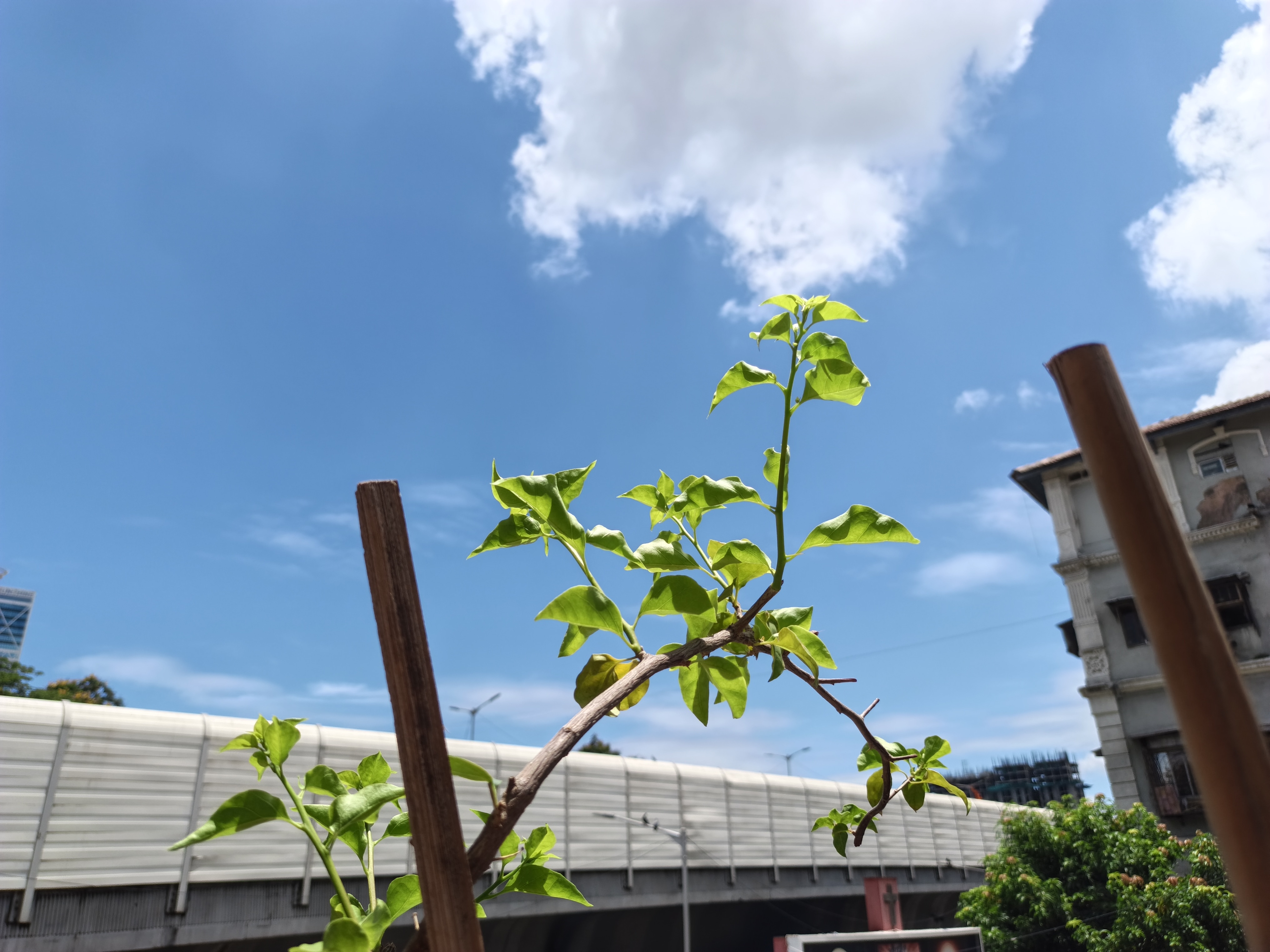
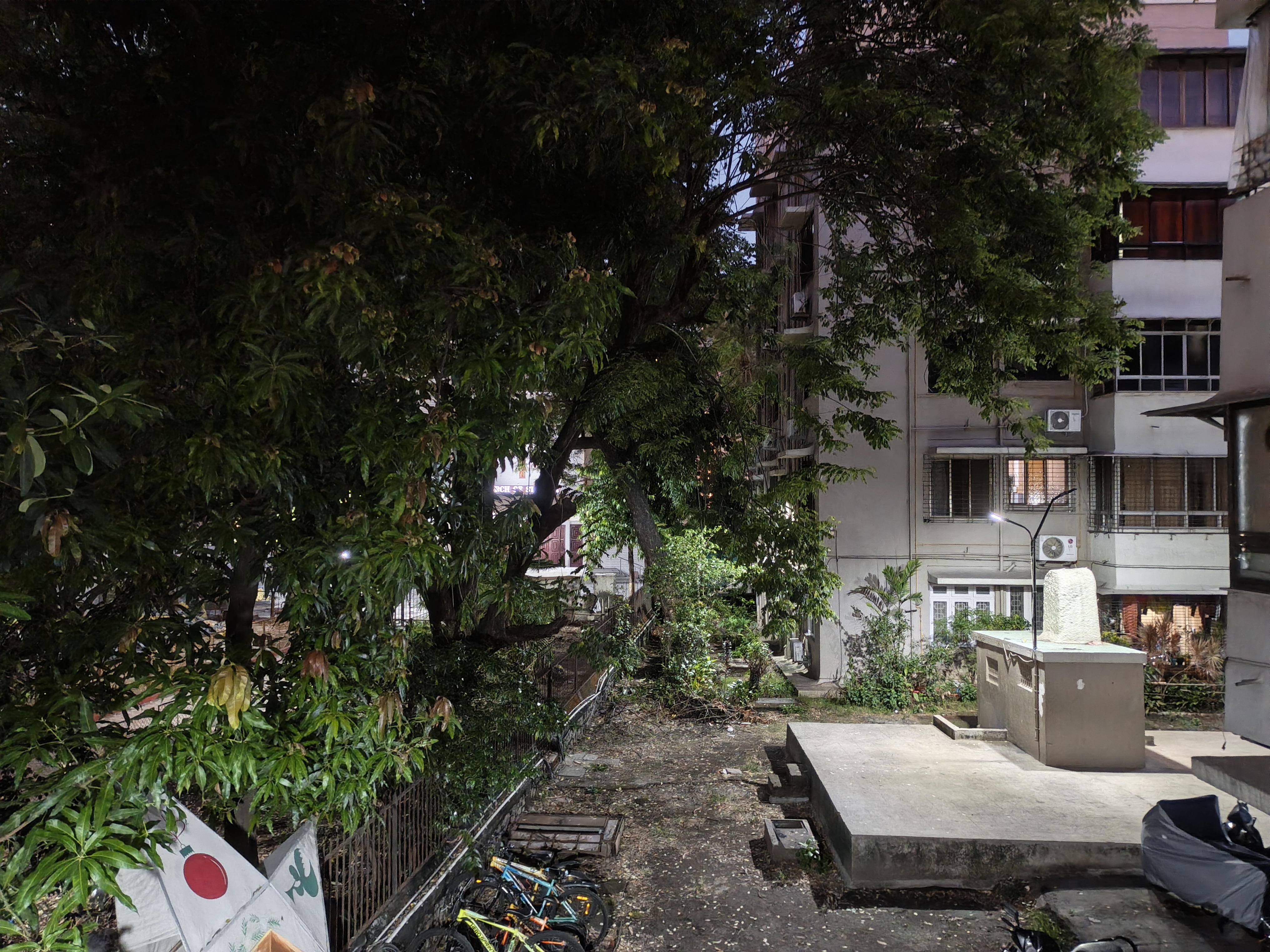
Infinix Note Edge primary camera samples (tap images to expand)
Photos from the primary camera are decent. While the overall colours are fine, the camera tends to boost the blues and greens quite a bit, like in the Portrait mode photo above. The level of resolved detail is a bit low in both daylight and low light. While the daylight photos still look great, things fall apart when shooting in low-light, because the primary lacks optical image stabilisation (OIS), which is present on some older competing smartphones from 2025. Photos have blotchy textures, there is visible noise, and the camera also tends to struggle with focusing in dimly lit environments. Indeed, given the state of affairs in 2026, OIS isn’t a standard feature on new, similarly priced devices.
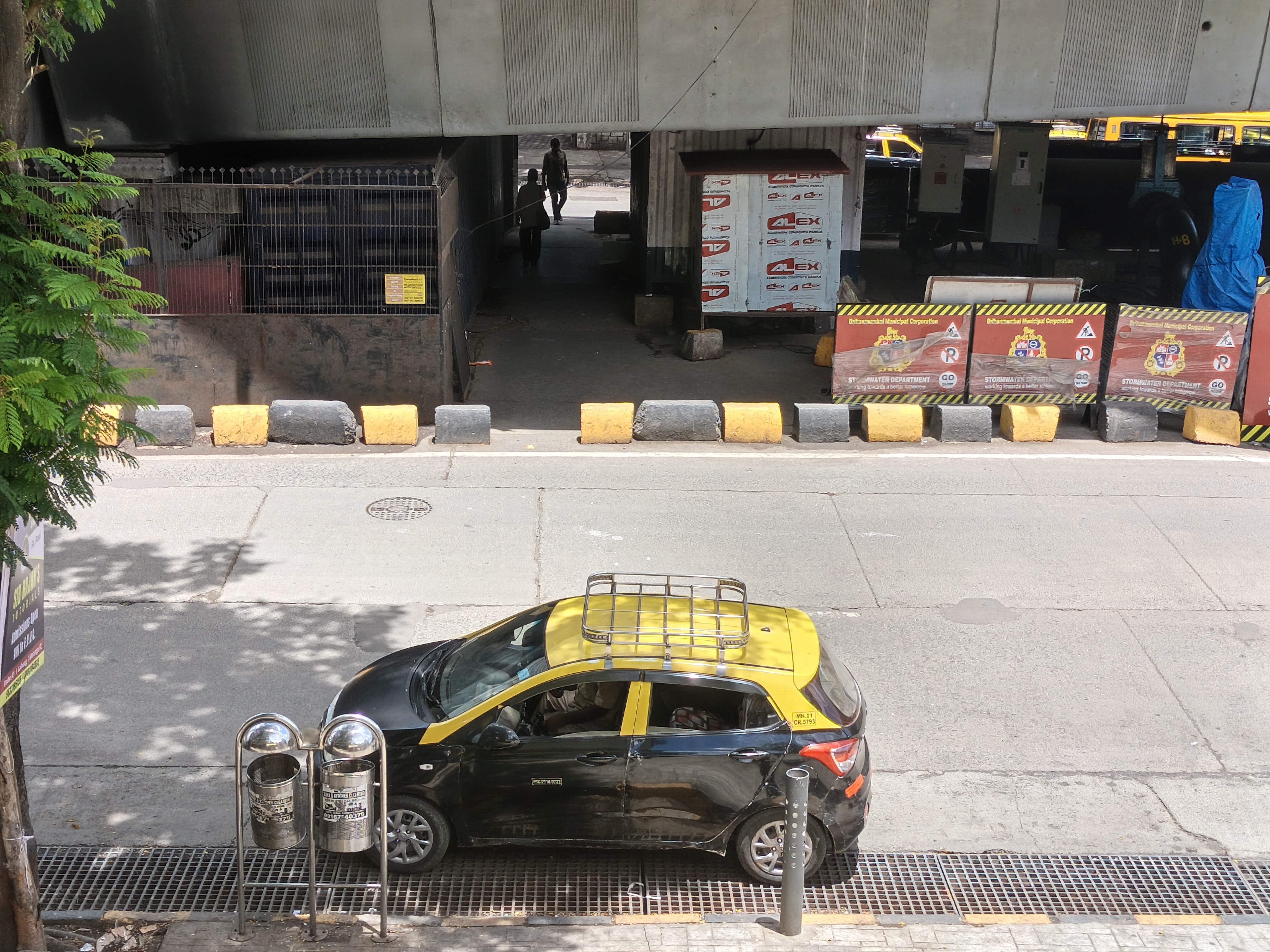
Infinix Note Edge primary 2x zoom camera sample (tap image to expand)
The 2X digitally zoomed photos have much less detail than at the native focal length. While the global properties remain the same as the 1X samples, you will notice garbled textures or characters on objects.


Infinix Note Edge selfie camera samples (tap images to expand)
The selfie camera exposes both the subject and the background well. Contrast is great too, but we would have preferred a bit more resolved detail. In low-light settings, photos come out soft even when you use the screen flash. Edge detection is not accurate in such settings.
1080p video recording from the primary camera offers the best stabilisation but appears a bit soft. 1080p videos captured at 60 fps have a sort of steady frame rate, but absolutely lack stabilisation, and so are not usable. 2K video captures manage the best quality but are limited to 30 fps. While the frame rate isn’t steady, another downside of shooting at this resolution is the lack of stabilisation, which results in very shaky footage. Recordings appear shaky even if you are standing still. Low-light video recordings have a lot of noise and have the same stabilisation issues.
The Infinix Note Edge packs a 6,500mAh battery inside that slim frame. While it may sound like a lot, you have to keep in mind that the 6nm chipset, which isn’t very power-efficient. And so, the Note Edge managed 16 hours and 4 minutes, which is good for a slim device and its price point. With daily use, the phone can get you through a whole day of heavy use (calls, gaming, etc.) and some more, which isn’t bad.
Using the bundled 45W charger, the phone charges to 40 percent in 30 minutes and reaches a fully-charged state in 1 hour and 15 minutes, which isn’t bad for a regular high-capacity battery.
Infinix Note Edge Verdict
The Infinix Note Edge definitely looks the part for a mid-range device. Its slim, premium-feeling design makes it feel unique and special at this price point. It sort of covers the bases for a sub-Rs. 25,000 smartphone, which everyone should approach with minimal expectations in 2026. Unlike the chunky Pova 8 we recently reviewed, it cuts fewer corners and so ends up offering better value while not indulging in too many gimmicks.
You have to keep in mind that the Rs. 22,999 price tag is for the base 6+128GB variant. However, the 8+256GB variant at Rs. 26,999 is also not a bad deal given that it offers more usable storage for a slightly higher asking price.
If you are looking for better gaming performance, the Realme P4x 5G (Rs. 22,999 onwards) should get the job done with some compromises. Motorola’s G67 Power (Rs. 22,999 onwards) is essentially a solid budget smartphone, but it does look the part for a mid-range device, now that it’s retailing at a mid-range price.
